
The Federal Energy Management Program (FEMP) provides information about energy-efficient products and energy-saving technologies that can help agencies meet federal energy-efficient product purchasing requirements.
Five legal authorities require agencies to procure energy-efficient products. By procuring and properly installing energy- and water-efficient products, agencies can meet their federal efficiency program requirements, reduce energy and water consumption, and save money.

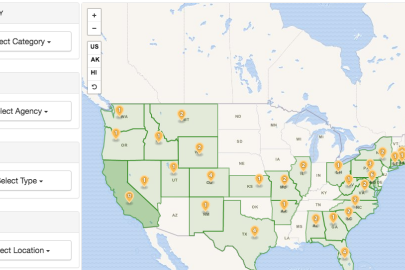
Sortable, searchable table displays energy-efficient products that are well suited for federal applications.
Learn more
Acquisition guidance to help agencies identify low standby power products that meet federal purchasing requirements.
Learn more
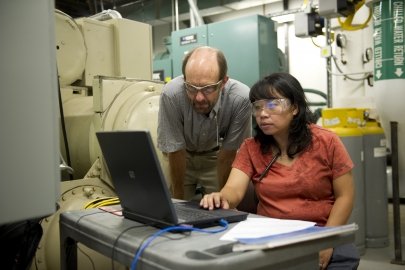
Offers details about four federal programs that specify products as energy- or water-efficient.
Learn more

Describes guidance on required procurement contract language for federal agency purchases of energy-consuming products.
Learn more
Short-form training videos highlight the various aspects of energy-efficient product procurement.
Learn more

Describes indoor and outdoor solid-state lighting solutions that can reduce lighting energy use.
Learn more
Federal Buyers and Specifiers

- Read about how to buy efficient products for the federal government.
- See FEMP's Contracting for Efficiency Best Practices Guide for incorporating efficiency requirements into solicitations.
- Find UNSPSC and ENAC product codes for tracking sustainable acquisitions
- Review minimum efficiency requirements tables for heating and cooling product categories.
Manufacturers and Vendors
- Read about how to sell efficient products to the federal government.
- Learn how FEMP designates efficiency levels for covered product categories.
- Suggest a new product category.
- Find out how products are measured for low standby power.
Key Resources
Provides technical assistance, resources, tools, and trainings to help federal agencies identify, procure, and deploy electrification and decarbonization strategies for federal sites, buildings, and fleets.
Website provides information on efficient, healthy buildings and environmentally responsible purchasing.
Features a regularly-updated database of manufacturer-supplied standby power data for desktop, thin client, and workstation computers.
Website provides a list of EV chargers and compares features, savings, and more to optimize your purchase.
Presentation from the 2019 Federal Environmental Symposium provides training on writing effective contracts for acquiring energy-efficient products.
Presentation from the 2019 Federal Environmental Symposium describes findings from a federal solicitations review and procurement survey.
Presentation from the 2019 Federal Environmental Symposium describes the ISO 14001/50001 link and DOE’s 50001 Ready Navigator.
Article provides an overview of FEMP’s lighting efficiency program and documents FEMP’s methodology for developing energy efficiency requirements.
Presentation describes federal procurement of energy-efficient products and FEMP’s federal procurement community survey effort.
Fact sheet provides an overview of energy-efficient product purchasing requirements for federal employees and contractors.
Fact sheet shows vendors how to increase sales potential by helping federal purchasers meet energy-efficient product purchasing requirements.
Document provides sample contract language for including energy-efficient products in federal construction projects.
Document matches UNSPSCs and ENACs to FEMP-designated and ENERGY STAR-qualified product categories, to aid acquisition tracking and reporting.
Recommended FEMP Courses
Need Assistance?
Need energy management guidance? Can't find a document or tool? FEMP can help. Ask FEMP a question.