Skip Navigation to main content U.S. Department of Energy U.S. Department of Energy Energy Efficiency and Renewable Energy
Bringing you a prosperous future where energy is clean, abundant, reliable, and affordable EERE Home
Federal Energy Management Program
 
About the ProgramProgram AreasInformation ResourcesFinancing MechanismsTechnologiesServicesHome
Energy-Efficient Products Home Page Energy Efficiency Requirements Energy Cost Calculators Model Language Resources

FEMP Designated Product: Industrial Luminaires

Legal Authorities

Federal agencies are required by the Energy Policy Act of 2005 (P.L. 109-58) and Federal Acquisition Regulations (FAR) Subpart 23.2 to specify and buy ENERGY STAR®-qualified products or, in categories with no ENERGY STAR label, FEMP-designated products which are among the highest 25 percent of equivalent products for energy efficiency.

Information about energy-efficient industrial luminaires in this section includes the following:

Performance Requirements for Federal Purchases
Buying Energy-Efficient Industrial Luminaires
Selecting the Light Source
Calculating LER
Buyer Tips
Cost-Effectiveness Example
Cost-Effectiveness Assumptions
Using the Cost-Effectiveness Table
What If My Energy Prices Or Operating Hours Are Different?
For More Information

Also provided is a portable document format version of Purchasing Specifications for Industrial Luminaires (PDF 205 KB, 3 pp). Download Adobe Reader.

Performance Requirements for Federal Purchases
Fluorescent T5HO Lamps
Upward Efficiencya Required Luminaire Efficacy Rating (LER)
Lensed Fixture Open Fixture
0% 63 or higher 75 or higher
Greater than 0% 65 or higher 78 or higher
Fluorescent High Performance T8 Lamps
Upward Efficiencya Required Luminaire Efficacy Rating (LER)
Lensed Fixture Open Fixture
0% 72 or higher 87 or higher
Greater than 0% 75 or higher 90 or higher
Metal Halide Lamps
Upward Efficiencya Lamp Wattage Required Luminaire Efficacy Rating (LER)
Lensed Fixture Open Fixture
0% 150 - 399 50 or higher 49 or higher
400 - 999 62 or higher 69 or higher
≥1000 84 or higher 76 or higher
1% - 10% 150 - 399 68 or higher 49 or higher
400 - 999 73 or higher 75 or higher
≥1000 71 or higher 96 or higher
11% - 20% 150 - 399 70 or higher 55 or higher
400 - 999 76 or higher 81 or higher
≥1000 82 or higher 87 or higher
>20% 150 - 399 76 or higher 80 or higher
400 - 999 76 or higher 70 or higher
≥1000 87 or higher 93 or higher

a Upward Efficiency is the portion of light directed up by the fixture. Both high-bay and low-bay HID luminaires are available with opaque reflectors, which direct all or most of the light downward, and with transparent refractors, which direct some light up. Fluorescent luminaires are available with openings which direct some light up.

Back to Top

Buying Energy-Efficient Industrial Luminaires

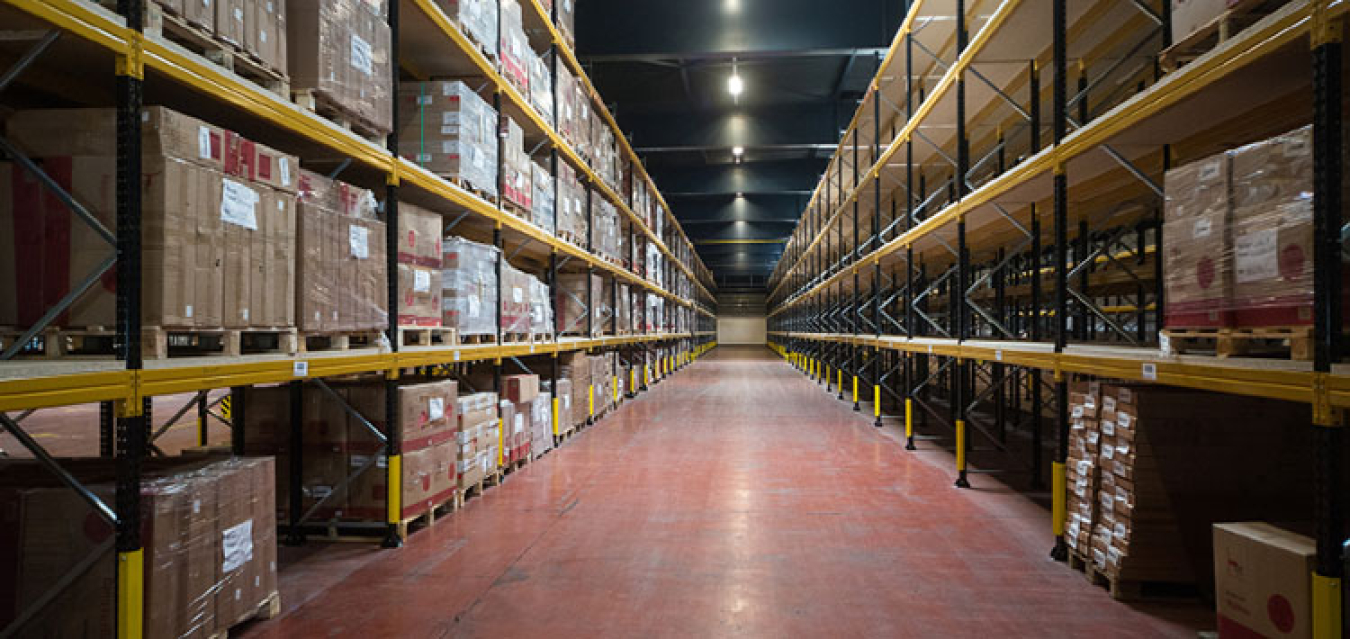
When buying an industrial luminaire, specify or select a model with a Luminaire Efficacy Rating (LER) that meets or exceeds those shown in the Performance Requirement table. Industrial luminaires are often referred to as "high-bay" luminaires. Luminaires of this type are also used in non-industrial applications, including warehouses, hangers, maintenance facilities, retail stores, gymnasiums, and other large, high-ceiling spaces. While the Illuminating Engineering Society of North America (IESNA) defines high-bay as over 25 feet and low-bay as under 25 feet, fixtures designated for high-bay and low-bay applications are often used interchangeably.

Agencies must use ENERGY STAR-qualified and FEMP-designated performance requirements for all procurements of energy-consuming products and systems including guide and project specifications, and construction, renovation and service contracts. These performance requirements should also be used in evaluating responses to solicitations. In contracts and solicitations, agencies must specify that commercial downlight luminaires meet or exceed the performance levels shown in the Performance Requirement table.

Agencies can claim an exception to these requirements through a written finding that no ENERGY STAR-qualified or FEMP-designated product is available to meet the functional requirements, or that no such product is life-cycle cost-effective for the specific application.

Back to Top

Selecting the Light Source

Fluorescent high-performance T8 or T5HO systems should be considered for high-bay and low-bay lighting applications because they are more efficient than metal halide systems over their system life. They also have other advantages including instant restrike, more uniform light distribution, and better color rendering.

Pulse-start metal halide systems are a good alternative when it is desirable to have a smaller light source or to direct more light upward.

Metal halide (MH) lamps are one type of high-intensity discharge (HID) lamp. In addition to MH lamps, industrial luminaires for higher-wattage HID lamps may also use high-pressure sodium (HPS) lamps. HPS lamps generally have higher efficiency and longer life, but they are not typically used where color rendition is important. Other HID lamp types, such as mercury-vapor (MV) and low-pressure sodium (LPS) lamps have very poor color rendition. Mercury-vapor lamps are much less efficient than other HID lamp types.

High-pressure sodium (HPS) systems are not recommended. Although they have been widely used in industrial and outdoor applications, HPS systems do not meet the visual performance requirements of most high-bay and low-bay applications, and the availability of pulse-start metal halide and high-efficiency fluorescent systems has substantially diminished the traditional HPS advantages of long life and high efficiency compared to standard metal halide or fluorescent systems. In circumstances where it is still desirable to use HPS systems, they are required to meet the corresponding metal halide system requirements.

Back to Top

Calculating LER

LER ratings may not be available for some manufacturers' products. If an LER is not available, buyers may estimate the LER by using the following formula:

LER = Luminaire Efficiency x (Lamp Lumens ÷ Lamp-Ballast Input Watts)

Luminaire Efficiency, Lamp Lumens, and Lamp-Ballast (System) Input Watts may typically be found in manufacturers' product catalogs and photometric reports.

The LER formula may be used with generally-available component performance data to determine the minimum performance of other components. For example, a known lamp-ballast efficacy may be used to calculate the lowest luminaire efficiency necessary to meet an LER requirement:

A high-performance T8 lamp/ballast system with 4 lamps and a ballast factor of 1.15 may produce 14,720 initial lumens with 144 input Watts. For an open fixture combined with these lamps and ballasts, what Luminaire Efficiency (LE) is necessary to meet the minimum LER requirement of 90?

LE = LER x (Lamp-Ballast Input Watts ÷ (Lamp Lumens x Ballast Factor)) = 90 x (144 ÷ (14,720 x 1.15)) = 0.77

To meet the LER requirement of 90, the Industrial Luminaire with the component performance values provided must have a Luminaire Efficiency of 77%.

Back to Top

Buyer Tips

Industrial luminaires using fluorescent lamps are based on high-output (HO) T5 lamps or on high-performance T8 lamps with high ballast factor ballasts. Using these technologies, the light output of fluorescent lamp luminaires can be comparable to that of many high-intensity discharge (HID) lamp luminaires commonly used in high-bay and low-bay applications. These fluorescent lamps have other advantages including less glare from the light source, much lower rates of lumen depreciation, and more control options.

"Pulse-start" metal halide lamps and compatible energy-efficient ballasts are recommended for metal halide industrial luminaires. Pulse-start technology reduces input watts and also increases light output (lumens) compared to standard metal halide lamps. Input watts may be reduced by up to 25%, resulting in an improved LER. Pulse-start lamps also provide faster restrike time, improved color rendition and stability, and longer lifetimes.

Because of the delay in restrike time, it is generally not practical to shut off metal halide systems completely except for periods of non-occupancy. Special metal halide ballasts can provide bi-level lighting control for use with occupancy sensors, and electronic pulse-start ballasts can provide continuous dimming down to about 33% of full light output.

Fluorescent systems offer the advantage of instant start and restrike and inexpensive continuous dimming, providing compatibility with a wide range of control strategies.

Back to Top

Cost-Effectiveness Example
1% - 10% Upward Efficiency Industrial Luminaire
Performance Base Model Required Level
Metal Halide Metal Halide 150-399 Lamp Wattage Closed Fixture Fluorescent High-Performance T8 Lensed Fixture
Luminaire Efficacy Rating (LER) 40 68 75
Lamps 1 1 4
Initial Luminaire Light Output 11,800 lumens 15,776 lumens 11,100 lumens
Lifetime Average Light Output 9,558 lumens 12,621 lumens 10,545 lumens
Power Input 295 watts 232 watts 148 watts
Annual Energy Use 1,062 kWh 835 kWh 533 kWh
Annual Energy Cost $64 $50 $32
Lifetime Energy Cost $672 $528 $337
Lifetime Energy Cost Savings $143 $335

Back to Top

Cost-Effectiveness Assumptions

Annual energy cost is based on 3,600 operating hours per year at an electricity price of $0.06 per kWh, the federal average electricity price in the U.S. Lifetime Energy Cost is the sum of the discounted value of annual energy costs based on an assumed luminaire life of 15 years. Future electricity price trends and a discount rate of 3.0% are based on federal guidelines effective April 2006 to March 2007.

Back to Top

Using the Cost-Effectiveness Table

In the example shown above, the metal halide industrial luminaire meeting the required LER of 68 or higher is cost-effective if its purchase price is no more than $143 higher than the price of the Base Model. The fluorescent industrial luminaire meeting the required LER of 75 or higher is cost-effective if its purchase price is no more than $335 more than the price of the Base Model.

The calculations are for energy costs savings only and do not include lamp replacement or labor costs. If lamp replacement and labor cost are included, the savings may be significantly greater.

Back to Top

What If My Energy Prices Or Operating Hours Are Different?

To calculare Lifetime Energy Cost Savings for a different electricity price, multiply the savings in the above table by this ratio: (Your price in ¢/kWh) ÷ (6.0¢/kWh). Longer operating hours will make an efficient industrial luminaire even more cost-effective.

Cost-Effectiveness Assumptions: Usage assumption is 3,600 operating hours per year. Assumed electricity price is $0.06/kWh, the Federal average electricity price in the U.S.

Back to Top

For More Information

  • DOE's Energy Efficiency and Renewable Energy (EERE) Information Center
    Phone: 1-877-EERE-INF or 1-877-337-3463
  • FEMP's Federal Lighting Guide (PDF 1.66 MB, 53 pp) provides helpful guidance on lighting projects. Download Adobe Reader.
    Phone: (877) 337-3463
  • National Electrical Manufacturers Association (NEMA) publishes Standards Publication LE 5B, Procedure for Determining Luminaire Efficacy Ratings for High Intensity Discharge Industrial Luminaires.
    Phone: (800) 854-7179
  • Illuminating Engineering Society of North America (IESNA) publishes guidelines and other information on high-bay and low-bay lighting.
    Phone: (212) 248-5000
  • Lawrence Berkeley National Laboratory provided supporting analysis for this recommendation.
    Phone: (202) 646-7954

Back to Top