EECBG Planning and Strategy Development for Local Governments Presentation (Text Version)
Below is a text version of the May 15, 2009 EECBG Planning and Strategy Development for Local Governments presentation. This presentation focuses on eligible activities planning for Local and State Governments. Speakers were Mark Bailey, George Burmeister, Johanna Zetterberg, Wendy Barrott, Mike Myers and Dan Beckley.
First Slide: Energy Efficiency and Conservation Block Grant Program
Mark Bailey:
Good afternoon. This is Mark Bailey from the U.S. Department of Energy, and first of all, I'd like to apologize. We were over — way over capacity because of the interest in this program and what we're up to, and we've had to make some very emergency technical patches and fixes' to add additional lines, both on the Webex and on the conference line. We want to welcome you to the initial webcast for the Energy Efficiency and Conservation Block Grant Program, brought to you by the U.S. Department of Energy. Today we're going to talk about your planning and strategy development for local governments and counties.
Next Slide: Energy Efficiency and Conservation Block Grant Program
The speakers that we'll be hearing from today are myself, Mark Bailey. I'm a program manager in the state and local program in the office of Energy Efficiency and Renewable Energy. Johanna Zetterberg is joining me here. She and I will be going through the Power Point presentation. And we also have George Burmeister, who will be helping facilitate. Mike Myers will be helping facilitate. Please ensure that your mute buttons are on, and I'm gonna hand it off to George.
Next Slide: The Purpose of This Webinar
George Burmeister:
Mark, thank you. Thank you very much, and thank you to everybody for bearing with us through these technical difficulties. It's a pleasure to be here. Thanks for taking time. trying to balance and need to get these funds out the door as soon as possible with the statutory responsibility of making sure they get results and that fraud and abuse is minimized, and they need strong metrics for Congress, as we all know in the American public, and thank you in advance, all of you, for delivering those to DOE. To their credit, they've solicited a bunch of opinions and guidance from local and state government leaders across the country and their input is reflected in the paperwork you're required to file and in what you'll see and hear today. They are doing their best to simplify the process for us all.
My job, briefly, I'm gonna talk about the purpose here and then the agenda. The purpose is primarily to provide you with an overview of the program early. For some of you, this is your first introduction to the program, and others it may be your sixth or seventh webinar. We have this in mind today as we present this information.
We'll also give you an overview of the eligible activities. There are 14 of them. We want you to see and hear about potential projects allowed through the program. DOE acknowledges the innovation many of you are known for, and you should leave this call with some innovative ideas and many proven traditional project and program ideas.
DOE also wants to give you guidance on the Energy Efficiency and Conservation Strategy. Lots of questions about this, and DOE will clarify this for us. Fourth and finally, DOE wants to give you guidance for successful implementation. They want to minimize delays as much as you do, and again, they desire strong defensible metrics from you.
Next Slide: Agenda
Next slide, please, the agenda. Quick minute on the agenda. We want to give you an overview of the program, as I mentioned, talk about eligible activities and the Energy Efficiency and Conservation Strategy. Then we're gonna move to some exciting stories from Fort Wayne and Dallas. Both Wendy and Eric have excellent — excellent ideas. I'll show you how they're approaching their activities and the program in general.
After that, we're gonna go to additional resources. We know you need them. DOE is, again, working with state and local government leaders to put these resources together for you. A bunch of websites, a bunch of paper and a bunch of technical experts for you, so you'll hear about that.
And finally, what many of you consider to be the heart of the webinar, we're gonna move to an interactive exchange between you and senior DOE officials in charge of the program in a question and answer period. And so that's a — that's a — that's kind of the quick shot — quick look at the agenda. I'm gonna turn it back over with the Secretary Chu slide. I'm gonna turn it back over to Mark Bailey, who's been working probably 80 hours a week on this program for many months. Mark, thank you.
Next Slide: Secretary Chu on the Block Grants
Mark Bailey:
George, thank you very much for that introduction. This program is a critical program as part of the President's Recovery Act. Secretary Chu is focused on this block grant program as not only for strengthening the economy, creating jobs at the local level, but he is fully focused on targeting efficiency, energy efficiency and conservation, because it's the cheapest, cleanest and most reliable energy resource we have today. And we can deploy it immediately to spur economic growth, but also to empower local communities to make strategic investments which are gonna be the foundation for our future energy policy and moving up to a low carbon economy.
Next Slide: EERE Recovery Act Funding Overview
I want to give you a quick overview on the funding of the Recovery Act. The Department has over $45 billion in Recovery Act funds, and the Energy Efficiency and Renewable Energy office has $16.8 billion of that $45 billion to manage. To give you a little bit of an appreciation of scale, that's a tenfold increase in the federal government's typical investment in efficiency and renewable technologies, research development and deployment. Of that, our office is managing $11.6 billion; $5 billion on the weatherization program for low income households, $3.1 billion for the state energy offices to run broad state energy programs and process efficiency in renewable sectors, and appliance rebate programs that help with purchase of — purchasing of Energy Star highly efficient appliances. And — and the focus of today, the Energy Efficiency and Conservation Program, both formula grants in the neighborhood of $2.8 billion and program — a competitive solicitation which will be available in two to three months for around $400 million.
Next Slide: Program Purpose
I want to now move — jog forward to the next slide. The purpose of this program is to spur economic growth. We know that. We create and retain jobs, make something happen now across the nation, in your cities, in your communities. We want to assist local governments, tribal governments in implementing strategies that both reduce fossil fuels, reduce total energy use and improve the efficiency of your transportation sector, your building sector and other appropriate sectors within your community.
Next Slide: Objectives
The strategic objectives of this program — next slide — include the following. To save energy and reduce greenhouse gas emissions, to invest funds — and this is a critical part of what we are trying to do — invest funds to stimulate the economy now and meet long term energy goals. Looking at methods of trading comprehensive strategies to accomplish that, resulting programs that — that persist well beyond the expenditure of the funding that we've provided you or will be providing you, and we'll talk a little bit later about how to do that. And — and importantly, leveraging public funds from the federal government and the local government with private financing to put capital into the markets and get projects happen. And the last thing here is we look and encourage coordination across metropolitan areas, cities, counties and states. Next slide, please.
Next Slide: Funding Opportunity Announcement
And I'm gonna introduce now Johanna Zetterberg, who's gonna take it from here.
Johanna Zetterberg:
Thank you, Mark. Hello, everyone. Great to be with you today. The previous slide, please. Thank you. What you're looking at right now is the image of the front page of the Funding Opportunity Announcement, which I hope by now you all have downloaded and read. This document is a great source of information for you on program requirements and program guidance. It's available on our program website, which is www.eecbg.energy.gov, and it's also available through Fed Connect. We will be amending this document as we move forward throughout the program, so please make sure to check one of those two places for the most updated and current information.
Next Slide: Appropriations
Next slide, please. Here you just see a basic breakdown of the funds under the program. I'm sure once again you're all well aware that nearly $1.9 billion is going through direct formula grants to eligible cities and counties. States receive roughly $767.5 million in direct formula grants. These grants go to the state energy offices within states and each state is required to pass at least 60 percent of their allocation through to local governments that are ineligible for a direct formula grant from DOE.
If you are one of those cities or counties on the line today that's not eligible for a direct formula grant from DOE, I would encourage you to contact your state energy office to ask them what their process is for providing these sub-grants. Indian tribes also receive direct formula grants, and as Mark mentioned earlier, there are some competitive monies under this program. $54.8 million, once again, for cities and counties that are ineligible for direct formula grants from DOE, and a larger pot for an additional competitive bucket. We will be issuing a separate funding opportunity announcement for the competitive funds soon. I know — I know you all have a lot of questions about those funds, but we'll be able to provide you with much more detailed information on a competitive grant once that funding opportunity announcement is issued.
Next Slide: Application Deadline
Next slide, please. The application deadline for the formula grants is June 25th. There are five steps that you need to take in order to submit your applications, and I want to just mention here that while the focus of today's webinar is on developing your strategy, we do have another webinar which we'll be kicking off on May 20th that will go over the application and registration for this grant program. That will be the focus of a whole different webinar, so please register for that. You can register in the same place that you registered for this webinar, from our website.
I'll just briefly go through these, because it's very, very important that you do all of these steps, otherwise you will not be able to apply for your funds and receive your allocations. You need to obtain your DUNS number. You need to obtain a CCR number. You may have other grants. You can just use those numbers again.
You'll need to register on FedConnect, and FedConnect calls it registering as a vendor, so please don't be confused by that. You are a vendor. Also, a very critical step. Once you've signed in, you need to join the response team as a team member. You will not be able to submit your application if you don't do this step.
Now, regarding getting the application materials, you'll need to download the application package from grants.gov, and there's information here in this slide on how to do that. And by the way, all of this information is in the Funding Opportunity Announcement in more detail. You'll also need to download some application materials which are part of the attachments of the Funding Opportunity Announcement. So if this sounds a little bit confusing, please read — read the relevant sections of the Funding Opportunity Announcement. This is all explained.
Finally, you'll need to submit your application through FedConnect. Many of you may be more familiar with grants.gov, but for this program, applications need to be submitted through FedConnect and you'll do that by submitting what's called a response in FedConnect. Next slide, please.
Next Slide: Critical Step
This just shows a screen shot of how to join the response team once you're signed into FedConnect. If you follow the arrow, the middle of the page on the right, that's where you'll be joining the response team. Next slide, please.
Next Slide: Eligible Uses of Funds
Okay. Now let's get to the fun part. This is the meat of the program. This is what you are all working on right now in developing your strategies and figuring out how to put this — these funds to work for you. You're probably all familiar with these categories, but we're gonna go over them over the next few minutes in greater detail, but before we do that, I'd like to just call your attention to some things here. Number one, you'll see that most of the eligible uses of the funds are for energy efficiency and energy conservation, just like the name of the program implies. There is a funding category for renewable energy technologies, and those must be on or in government buildings.
The second thing I'd like to call your attention to is that these funds can be used throughout the community. You are not limited to using them on municipal buildings and facilities. The third thing I'd like to tell you is that we really encourage you to use this money to develop programs and not just projects. If you use the money as a real investment in building capacity within your city or your county to build a program that can last beyond the grant period, you'll have those sustained benefits for a long time. Of course, you can always bundle various projects underneath a program.
And — and lastly, the funds must be obligated within 18 months. That means committed or under contract, and they must be expended or spent within 36 months, that's three years. That's the grant period.
Next Slide: What do you plan to do? Eligible activities. Model EE&C Strategy
Now I'd like to go into — next slide, please. Let's begin to go through some of these eligible uses of funds in more detail. Next slide, please.
Next Slide: Development of a Strategic Plan
Now, one of the eligible uses of funds is the development of a strategic plan. I know that there's some confusion about how this works with Attachment D, also called the — excuse me, Attachment D of the Funding Opportunity Announcement, which also might be referred to as the Energy Efficiency and Conservation Strategy. I want to just clarify that — and we'll talk about this later in the — in the webinar, but you have a couple choices for how you submit your strategy that's required as part of your application. But — but even though you will be submitting that strategy, you can still use your program's funds to conduct planning activities to develop any sort of energy related plan for your community or working with your neighboring cities or counties or regions. You can still do that. If you have any questions about that, let's get to that during the question and answer session.
Next Slide: Technical Consultant Services
Next slide, please. And you can also use some of your funds for technical consultant services to assist you in developing and/or implementing your strategy. You can bring in some experts to help you with all aspects of that. You're not on your own here.
Next Slide: Residential and Commercial Building Energy Audits
Next slide, please. And at this point, Mark and I are tag teaming, so I'm gonna turn it back over to you, Mark.
Mark Bailey:
Thank you, Johanna. Number three is the residential and commercial buildings energy audits. So your programs can include activities which support and fund audits in residential buildings, commercial buildings, in local government buildings. But one point to keep in mind here when you're doing audits is focus in your plan, your strategy on how the audit will be financed and carried out. Audits are great. They show you an assessment, they show you the potential, but until you renovate the building after the audit, you save no energy.
Next Slide: Financial Incentive Programs
And that's — move us to slide — the next slide. Slide four, or activity four, financial incentive programs. This is the heart of what your planning strategy should be all about. How are you going to finance, provide the capital, for the projects which you hope to implement. A good program at the local level, at the state level, anywhere, includes policies, technologies and capital. And we want you to focus on things that take these monies and pay dividends locally and highly leverage the capital monies or the money the Department of Energy is providing to provide capital that could be leveraged 10, 20, 50, 100 to one by using mechanisms like creating a Roth revolving loan fund.
Everyone should be thinking about how could we have revolving loan funds locally. How do you take that — the money and amortize efficiency retrofits over long periods of time? Can you use bond financing locally to help pay the upfront costs for residential retrofits, for example? Can you buy down the interest rates to make the cost of the money cheaper?
Can you — what can you do to aggregate and reduce costs that way? Can you work with your utilities, your municipal utilities, to provide on bill financing for renovations? And when you're looking at institutional opportunities within your municipal buildings, your city, your county buildings, your schools, your universities, your hospitals, look at things like energy savings performance contracts, which can bring in private financing to help you renovate your buildings.
Next Slide: Energy Efficiency Retrofits
Next slide, please. So energy efficiency retrofits is where you're headed. You do your audit, you find your capital, and the bottom line is you need to renovate your buildings. This can renovate residential, commercial, industrial, local government building retrofits. It can — it can be partnerships with non-profits, with energy service companies, with your other sectors within your local governments to identify opportunities and then renovate those buildings. You can look at things like re-commissioning your buildings, where you're actually going in and without spending huge amounts of capital, you're just making the building operate more efficiently, a very low cost measure that has huge paybacks.
Here's where you can look at your training opportunities, in creating that green job training and those markets for putting jobs out there in this green economy by looking at building retrofit. Who's gonna do your building retrofits? Who are the trades that are typically doing construction in your cities and counties and how can you use them, re-train them, build up the demand for what they provide?
Next Slide: Energy Efficiency and Conservation Program for Buildings and Facilities
Next slide, please. The next energy efficiency and conservation programs for buildings and facilities, and these are — this is an activity which includes comprehensive programs. Maybe a neighborhood green energy efficiency retrofit program, maybe providing free retrofits to low and moderate income residents, coupling this kind of work with work that will also supporting to our weatherization program, for example. But maybe look and say weatherization provides retrofits for one part of a low income population, how do you use the block grant and other mechanisms to reach the entire residential neighborhood. Here's where you can look at establishing high performance building practices and codes and standards, leveraging HUD and DOE and utility monies and partnerships and resources to help you get your job done. Now I'm gonna hand it back to Johanna for the next activity.
Next Slide: Development and Implementation of Transportation Programs
Johanna Zetterberg:
Okay. You have a lot of options under this funding category, development and implementation of transportation programs. The main key is that they have to conserve energy. You'll see here some examples; employee flex time programs and promoting the use of satellite work centers, encouraging zoning guidelines that promote energy efficient development, creating regional transit-oriented development. You'll see a lot of things here and we really just want to encourage you to do things that are gonna work best for you. We know that there is no cookie cutter approach to local government. You know that you all are very unique in many ways; size, region, climate, et cetera, resources, so please — please propose activities that are gonna work for you.
Next Slide: Building Codes and Inspections to Promote Building Energy Efficiency
Next slide. You can also use funds for building code inspections and development of those building codes. The Department of Energy has a lot of resources through our Building Technologies program. We have several programs, the Builder's Challenge, Net Zero homes, the energy smart home scale, which you see here. You can adopt advanced building codes that target energy savings of 30 percent or more than your current standards. This is a really great high impact activity.
Next Slide: Energy Distribution Technologies
Next slide. You can also do energy distribution technologies that create energy efficiency improvements. For example, combined heating — combined heat and power systems and district heating and cooling systems. The key here once again is that you develop energy efficiency improvements and conserve energy.
Next Slide: Material Conservation Programs that Lead to Energy Efficiency
Next slide, please. You can also do material conservation programs that lead to energy efficiency. Once again here, lots of options. I know there are several local governments who already have this type of program and we really encourage you to use your peer networks, to share best practices and information, success stories and best practices learned through experience of these programs that have already been implemented. Back to you, Mark. Next slide.
Next Slide: Reduction and Capture of Methane and Greenhouse Gases generated by landfills or similar waste-related sources
Mark Bailey:
On to activity number 11, is reduction and capture of methane and greenhouse gases generated by landfills or other similar waste-related resources. So here you can take and purchase and implement technologies to reduce, capture and use methane and other gases, such as landfill gas projects, to make better use over your waste stream, connect other power sources to waste water treatment plants and other large energy uses — energy users locally that you can take waste and turn it into a benefit.
Next Slide: Traffic Signals and Street Lighting
Next slide, please. The twelfth activity is traffic signals and street lighting. Taking advantage of a very simple measure to replace — install, replace traffic signals, street lighting, with energy efficient technologies, including LED's, light emitting diodes and any other technology of equal or greater that will provide tremendous energy efficient benefits. You can also look at planning activities like synchronizing traffic lights, like looking at street lights and lights throughout the city, to look at very simple measure lighting efficiency.
Next Slide: Development and Implementation of On-Site Renewable Energy on Government Buildings
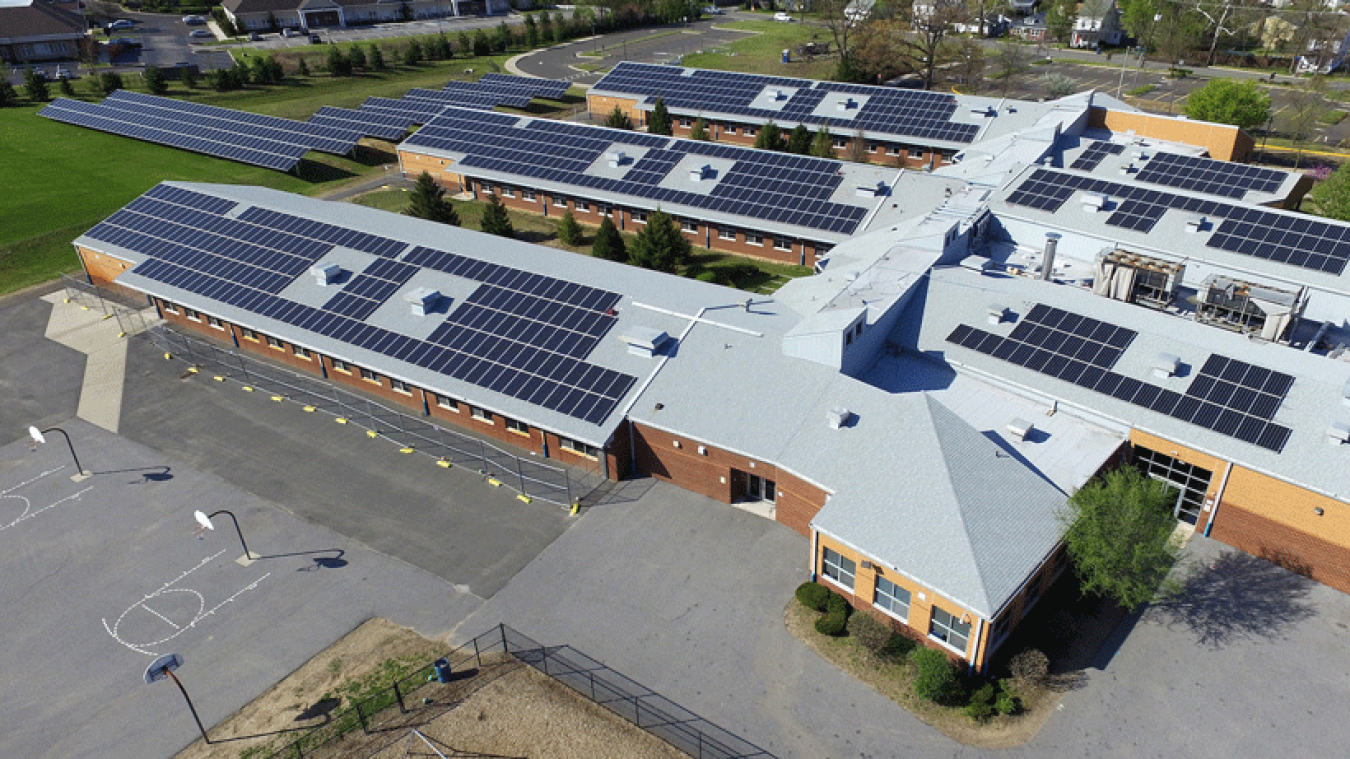
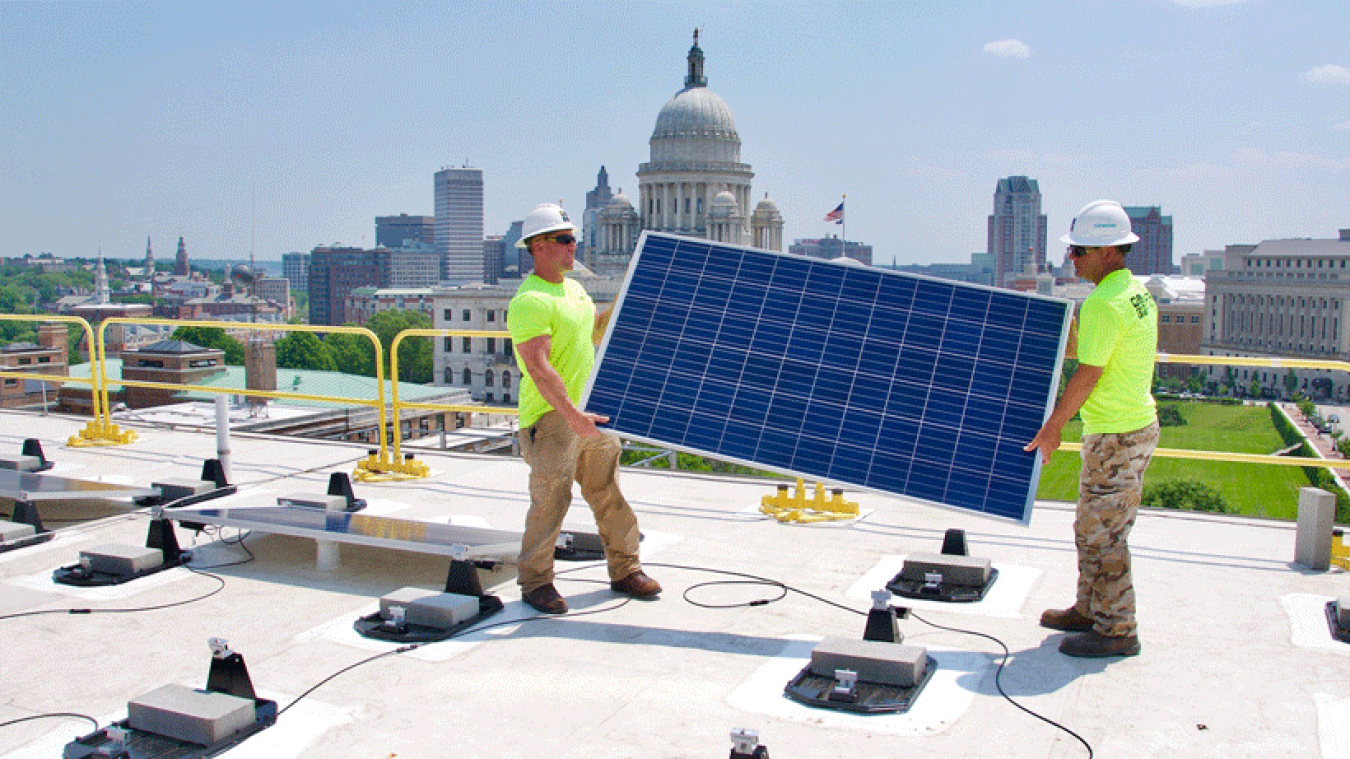
Next slide, please. Development — or implementation of onsite renewable energy on government buildings. Here's an opportunity to integrate renewable, solar and other renewable technologies on your government buildings. Taking a look at once we've renovated our city hall, once we've renovated our county, city buildings, let's also add renewable to reduce — reduce the amount of electricity onsite that's needed after we've reduced the demand for that electricity through insulation and heating and cooling systems. Developing a city wide power purchase agreement, another way to bring potential outside financing and partnerships into play that can put renewable energy on your rooftops. Installing renewable energy systems on targeted facilities, libraries, fire stations, office buildings like the Moscone Center in San Francisco, California, are great demonstrations of what can be done by integrating renewable energy with efficiency — energy efficiency and conservation.
Next Slide: Other Appropriate Activities as Approved
Next slide, please. And here's sort of an open area — is other appropriate activities. Here's where you can submit activities for approval that you believe are outside of the 13 activities but justifiable as part of the efficiency and conservation measures meeting the intent of the law and the intent of the secretary and the program — block grant program. Think innovation here. What — what could you do outside of here that is a great idea, that will save energy. And the bigger point here is proposing it and defending it and providing the benefit for the calculations and we'll consider all ideas. I'm now gonna pass it back to Johanna, but before I do that, I want to make one quick housekeeping statement. Because of the huge amount of interest, the huge subscription to this webcast, if there are any of you that are currently listening to the webcast that cannot see the Power Point, we will be e-mailing that Power Point out to the entire registration list during the call and/or after the call. It will also be posted on our EECBG website. Any questions that you have during the call can be e-mailed in and we will be answering those at the end of the call. Okay, Johanna, back to you.
Next Slide: Attachment D of the FOA
Johanna Zetterberg:
Thank you, Mike. The next slide, please. I'd like to just talk a little bit about the Energy Efficiency and Conservation Strategy, aka Attachment D of the Funding Opportunity Announcement, which is part of your application packet.
Next Slide: Two Options for Submitting EE&C Strategy
Next slide, please. There are two options for when you or the local government can submit your EE&C strategy. One option you have is to submit it at the time of the application using Attachment D. Now, for some of you, you might need a little bit of time to plan your activities and maybe you need to use your funds to do that. You do have the option to submit your application without the strategy, receive your funds or a portion of your funds, and Mark will tell you about that very shortly. And you will be able to use your funds to develop your strategy. You will have to submit your strategy within 120 days of when you submitted your application if you choose to go that route. So once again, I just would like to reiterate that you can still do planning activities using your funds over and above your submission of your Attachment D or your Energy Efficiency and Conservation Strategy.
Next Slide: EE&CS: Your Answers Should Address
Next slide, please. Now let's go over the questions that are on the Attachment D form, and if you submit your strategy within 120 days instead of using the form, you'll still need to address all of these questions. Question one asks you what is your proposed strategy. I want to make clear here that what we're asking for is your strategy for use of these block grant funds only. Many of you already have developed energy related plans and strategies in your communities and you're more than welcome to reference those, but what we're really asking for here is a description of what you plan to do restricted to the scope of the activities that are funded with your block grant allocation. We also would like you to briefly explain the major milestones that will ensure that you are successfully implementing your activities.
Question two asks you what is your proposed implementation plan. We'd like to basically know here how you plan to implement your activities. You can just how you plan to do this. It would be helpful for you to also identify the eligible activities specifically and the programs and projects that fall under those. You can relate your responses to the goals that you have described under the answer to question one also.
The third question asks you is how you are working with adjacent units of local government, and this was one of the — one of the things that was actually in the authorizing legislation that created this program, so Congress specifically wanted to ask you how are you working together and coordinating with each other. So please explain once again just in your own words how you're doing that. Many of you I know already have relationships, so hopefully that won't be such a brand new activity for you.
Next Slide: EE&CS: Your Answers Should Address
Question four similarly asks how will you share information with your state. Now, the states are also getting allocations under this program, and they have to report to us in their strategy about what you're doing. So it really benefits everyone to know what you're doing and look for those leverage points where you can work together and coordinate to make maximum use of these funds to benefit you.
Question number five is how will your activities sustain benefits beyond the three year Recovery Act period. We really — we ask you this question because we really want you to think of this money as an investment that's gonna yield benefits and not just something that comes and goes and maybe you spend it on a few projects and you're really not maximizing those benefits that can come from treating it like a real investment. So please explain your plans for how the benefits will be sustained beyond the grand period.
Question six is regarding the transparency and accountability that we're all subject to under the Recovery Act. So we would like to know from you what steps are you taking to prevent fraud, waste, error and abuse as you implement your activities and use your funds. Now, for each of these questions, we've shown you some examples and you can refer to those. And I'd like to also mention that we are posting on our website some models, sample filled out strategies. I know there have been a lot of questions about what level of detail is required or is appropriate, you know, how to phrase things, and so you will be able to look at those model strategies. I believe they will be up by the end of today, so you can go back to the website later and look for those.
Next Slide: B-1 Attachment — Project Activity Sheet
Okay, I'm gonna hand it back over to Mark now, and Mark, maybe you can talk about the project activity sheet form also required in the application package which supports these strategies.
Mark Bailey:
Thank you, Johanna. Yes, there's two things you need to provide to the strategy and an individual project activity sheet for each activity you choose to take on within your plan. You need to within that project activity sheet describe and summarize the activities, describe the proposed benefits, and keep in mind that these benefits that you're proposing along with the budget for that activity are estimates only.
We will be providing estimated energy savings multipliers within the next few weeks to help you finalize your estimates. When you — we've had a lot of questions on how do I calculate job creation. As you know, because this is all about job creation, all about spurring economic growth, we are currently working with the office of management and budget, the secretary's office, working directly with O and B and we'll be providing guidance within the next two weeks on doing job creation calculation, again, for your estimated benefits for each project activity. Be brief with these project activity sheets, be clear and be complete.
Next Slide: Staged Disbursement of Funds
Okay, next slide, please. Tonight I talked a little bit about the staged disbursement of the funding. Once you have submitted your applications, it's been reviewed, approved, here's how the disbursement will work. For every grant between $0 and $250,000.00, 100 percent of the allocation will be disbursed at the time of the award. For grants between $250,000.00 and $2 million, applicants may receive up to $250,000.00 for the development of their Energy Efficiency and Conservation Strategy and approved activities. The additional amounts will be provided within the — the balance of the allocation will be obligated upon DOE's approval of the recipient's strategies. If you're receiving a grant over $2 million, applicants again may receive up to $250,000.00 at the time of the award for the development of your strategy and approved activities, or 50 percent of the total allocation if you have submitted at the time of application your Energy Efficiency and Conservation Strategy, which is received and approved by the department. That's how — this information is included — included in the FOA. So again, I urge you to take a look at the FOA and make sure you understand these activity sheets, the strategy development and the different guidelines that are — that are provided there.
Next Slide: Limitations on the Use of Funds for Local Governments and Tribes
Next slide, please. As you develop your strategy, there's some considerations that we want you to keep in mind. As you're developing things, you may want to stay away from some activities which may or may — that provide a limitation on what you may decide to do. The first limitation is on the use of funds for reporting and administration costs — excuse me, for administration costs, excluding reporting. The limitation is 10 percent, or $75,000.00, whichever is greater. The second limitation to keep in mind is the cap on revolving loan funds of 20 percent of the total, or $250,000.00, whichever is greater between those two numbers. And the third limitation I want you to keep in mind on is the cap on the sub-grants, the money that you sub-grant to other organizations within your community, non-governmental organizations for assistance and implementation of a strategy. That is a cap of 20 percent, or $250,000.00, whichever is greater.
Next Slide: NEPA — National Environmental Policy Act
There's also some considerations to keep in mind as you're planning your activities, and that's — the next slide, please — that's NEPA, or the National Environmental Policy Act. And the key point here is in the Funding Opportunity Announcement, in the FOA. Keep in mind that there are activities listed in the FOA that likely will qualify you for a categorical exclusion. What that means for you is saving time. That means you'll move to implementation much, much faster and make our assessments on the NEPA review very simple.
The other thing that I want you to keep in mind is there are activities which could serve to require a lengthy delay in your application, and we want you to stay away from those as well. So there's two sort of areas, one activity that's likely to give you a categorical exclusion. The other activities to keep in mind are those that would trigger a full NEPA review, which could delay your planning, your implementation sometimes. I'm gonna stop there and I'm gonna turn it back over to Mike Myers or George, and he's gonna talk a little bit about setting up our two guest speakers that have agreed to come on today and talk to us about what they're doing in their planning activities to date.
George Burmeister:
Thank you very much, Mark. This is George Burmeister again. Great background, great information. A quick housekeeping issue, we are interested in getting questions from you, and you can type those into the bottom right hand side of your screen, and we are passing those questions on to DOE. So go ahead and type questions in during the entire webinar. We appreciate that. Also, thanks to the IT people for straightening out some of these technical issues since we started.
I want to introduce the first speaker. I get to introduce Wendy Barrott from Fort Wayne. She is Director of Energy and Environmental Programs, a big job. She's been with General Motors — she worked for General Motors for about 13 years. She's got a great mix of public and private experience. She's an active member of Public Technology Institute, PTI. She spent a few years with — more than a few years with the regional county air quality office, and she's been with the city of Fort Wayne for three years. They're an innovative city known for their aggressive energy efficiency programs, and Wendy, thank you so much for being here, and it's all yours.
Next Slide: Start Now!!!
Next Slide: Fort Wayne, IN
Wendy Barrott:
Okay, thank you for that introduction. Fort Wayne, Indiana sits in the northeast corner of Indiana, which is smack dab in the middle of the conservative Midwest. It is a population of about 250,000. The county that it resides in, which is Allen County, has a population of 350,000, and we've been allocated around $2.4 million for our conservation.
Next Slide: Positioned for Success
Next slide, please. We in Fort Wayne believe that we are pretty well positioned for success in terms of getting the block grant and spending the block grant. I wanted to do a little background. In 2006, the former mayor appointed the Green Ribbon Commission, who was to identify an energy strategy for the city. As a result of that, we have an identified strategy. One of the pieces was to adopt a city energy policy, our first ever energy policy, and it selected some specific goals that have been contained in the Green Ribbon Commission report.
We have also developed an energy baseline. We have that baseline both for our government operations and our community. We have a fully populated portfolio manager for all of our civil city buildings, and we did that so we could go out for an RFP on a guaranteed energy savings contract. I'll say more about that later. Or, no, I won't. I'll say it now.
So we did do that, and we have entered a new contract for an investment grade audit. The results of that are due back on May 29th, which is kind of why we're in a conundrum for which way to go in our program. The investment grade audit will come back on the 29th with how much savings we can get so we can borrow against — against it for low — low emission funds, how much percent savings we can get on each building by building and what the proposed upgrades will cost us. It's also supposed to identify some other potential alternate energy things that might be really cost effective to put in.
We also have in our toolbox of information a market potential study for energy efficiency that was completed by INM early this year. INM is a subsidiary of AEP. And we also have NIPSCO's pretty recent gas energy efficiency initiative, and we fully use those tools to help us identify portions of the market to target for energy efficiency.
Next Slide: Goals — Energy Policy
Next slide, please. Just briefly, I'm not gonna go over all these. This is a big slide. But this basically is the goals that we picked out of the Green Ribbon Commission and put into the city's energy policy. As you can see, they're really broad. They cover vehicles, public transportation, city use of energy, community energy use and renewable energy. Anyone who wants a copy of this report, it's on our website, which is www.cityofFortWayne.org. Go to the Green Ribbon Commission.
Next Slide: Steps to
Next slide, please. Oops, I. So we have some steps to do this, and so we have register on FedConnect, and I'm happy to say that that's complete. We also had a baseline for our energy use, and so I'm currently updating that with the most recent information. We are doing this second baseline in total compliance with the recently released greenhouse gas protocol, which was released by Eckley and the California Board. That will become the model and the standard for how to account for local government emissions. And we are working on embodying our existing goals that we have into our energy efficiency block grant strategy. I have this grant, and our plan is we plan on submitting our strategy with our application on no later than June 25th.
Next Slide: Project Activities?
Next slide, please. So what are the potential project activities? Well, we basically are looking at two different columns of — of where we could go with this, and we really won't know which way we're gonna go until after we see the results of this audit which will end May 29th. The first column is that we could maximize, you know, the effect of Guaranteed Energy Savings Contract by using the block grant money to move us forward to our goal of 35 percent reduction in our buildings. The amount that we're expecting the guaranteed energy savings contract to come in with lots of opportunities. They're thinking between 18 and 20 percent savings doing standard things on our current energy use, which is, for this city, between 300 and 600 — around $500,000.00 to $600,000.00 of savings annually.
And we have another little wrinkle that's been added to this. The Indiana state legislation recently changed the legislation which enables this to allow the project lifespan to go from 10 years to 20 years, so that complicates everything. So we produce the block grant to augment our Guaranteed Energy Savings Contract projects for things like maybe we would do a chiller that maybe wasn't cost effective within the timeframe of the project. Maybe we could do a full total take application on a building, where it's really close to being useful but not quite enough money in the Guaranteed Energy Savings to borrow them.
The second track is the other possibility, and that would be a program that was broader, that embodied more the elements of the 14 activities permitted. We're looking at a revolving loan. A revolving loan we can do. We actually are just setting one up in our city utilities department so we would have the administrative capability to administer a revolving loan program.
We're looking at energy efficiency programs. We would be partnering with the utilities, which would be NIPSCO and INM. And we'd also be reaching out to the county, because they also have a small block grant, and reaching out to the cities that are less than 35,000, with the thought that we could deliver the program for just one administration overhead instead of multiple.
We also would be looking at education outreach, and we have two — two programs we have ongoing that if we select this and we could put additional block grant money into it, they could be bigger. And the two programs I have, one is the green business — a green business program where we certify businesses being green. It's a pretty easy certification to get. It's really designed to form a network of businesses and get businesses contacts. Get them to baseline their energy use and get them to do some little basic things like put up and to clean their catch basins on their property. Some really pretty straightforward. You know, site recycling programs and things like that.
The second program we're doing which is brand new this year, we're gonna be piloting it, it's sort of a carbon support group for residential. Our plan is to use our robust neighborhood association organization and do small groups, between 10 and 15, where you sit down with citizens and you go through the — you know, you have them collect their energy use, you have them approximate their carbon footprint, and then you have them developing a plan on how to reduce their carbon footprint. Those would be the two types of examples there.
And the other one would be internal grant and internal grants. These would go to other city departments. For example, we would leverage other projects, and some of the examples of things that could work would be we have a really extensive greenway system here which we're working on expanding, and we could expand that faster by adding some money to that. You know, maybe some extra miles this year, an extra two miles this year instead of, you know, what we were planning on doing.
We also get money here, and we have a commitment to put in bike lockers and we could use this money for additional bike lockers so we could get more in faster. And we're also working on a bike lane marketing program, and, you know, we could leverage the money that the city has for the bike lane marking and mark more bike lanes at one time, rather than having to wait. And in the meantime, while I'm waiting for the big day of May 29th, I am drafting everything I can draft, as far as I can get with the activity sheets for all the possibilities to try and, you know, smooth the last couple of weeks of this, which I expect to be very hectic. And that's the end of my presentation.
Next Slide: Partnerships and Purpose
Mike Myers:
Well, thank you, Wendy. That was great to hear. This is Mike Myers, and thank you for your presentation. That's great to hear all the things that you're doing in the city. Our next speaker represents a large city, and that is the city of Dallas, my home state. Our speaker is Eric Griffin. Eric is the interim director for the office of Environmental Quality for the city. The city of Dallas has been doing great things. Everywhere you go now in the city, you're hearing about talking green, you're hearing about energy efficiency, you're hearing about emissions reduction. And to talk about the city of Dallas activity and their planning approach, let me turn it over to Eric Griffin. Thank you.
Eric Griffin:
Well, thank you so much, George, and first of all, let me start off by saying thank you to the Department of Energy for being so proactive and trying to get information out into — into the city's hands. This is new for all of us, and I think as we try to build this from the ground up, there's some real potential to make long term relationships amongst all of the that we have on the phone here today.
I also really enjoyed Wendy's presentation. I will say I'm gonna take a little bit different approach, because I've already given a presentation on what the city of Dallas is planning for use of our EECBG funds. I will touch on it very briefly at the end of this presentation, but I have given a couple of other talks and I've spoken with many of you personally. If I haven't been able to get back to you, let me apologize now. I promise, I'm trying to work through all of the e-mails that I receive, but you can go to the Climate Communities website to hear some webcasts that have been done in the past to hear more in depth about what Dallas is doing.
So what I'd like to talk about today is really how we got to where we are, as far as partnerships and planning. This has been crucial for us because as George alluded, we have 1.3 million individuals living in Dallas proper, but we sit in the middle of a region that holds 6.6 million people. So any decisions that we make affects a large population.
Next Slide: Preparation for ARRA
Let's go back a little bit in the history and I'll talk about the American Recovery and Reinvestment Act and how we approached that. Of course, back in January is when Congress began discussing what this package would look like, and at that time, our city manager decided it would be a very good idea to have an infrastructure in place to deal with the various funding sources that were coming our way. So she very astutely put together a group of task forces to look at each and every local source of funding that would come from the ARRA. They did a law course in the middle of February, and our task forces began work immediately.
We were allowed to assemble on teams, both internally and externally, have advisors from outside the city to determine what would be the best way to use funding for a program that had really never been in existence before; authorized, but not appropriated to. And we had weekly updates as a group of task forces during that period. We had two specific sessions to deal with interagency planning. We invited many of the regional planning bodies around north central Texas to be with us, either in person or on a conference call. We had two days of meetings in March and we just recently — actually, today and yesterday, had another series of meetings with those agencies, to ensure that we were all headed in the right direction together.
We took our stimulus package funding action plan to our city council on April the 1st, and I'm gonna give you another — I'm gonna give you a website to go to, to see all of these plans that we have for our funding beyond EECBG really quickly here. If you're familiar with Tiny URL, I'm giving you a small address. It's Tiny, T-I-N-Y, URL.com, and that's gonna be b as in boy, v as in Victor, t as in Tom, t as in Tom, h, and that will take you our briefing that outlines our intent to spend all of our ARRA money.
So we just went through an election. We have a couple of seats that are still in runoff situations, but we have a series of new council members, so we're gonna go back to these briefings again, and in June, we intend to finalize our strategy and submit our EECBG application, including our Attachment D. In July, we'll go into council recess, and then in August, we anticipate receiving our EECBG formula award, with the assumption that we've had very good dialogue with DOE and they love all of our plans, and then we'll being our program in September and October.
Next Slide: Internal Structure to Address ARRA
So if you go to the next slide, just briefly, that's the structure that we put together. The City Manager, as I've said, had a number of task force chairs. She appointed two individuals to really oversee all the activities in the city; one of them interagency liaison that dealt with all of our partners in the area. And we already have an intergovernmental services department, but we've used them as our legislative and fund management coordination, so they'll oversee all of the spending and reporting in the end. We also have another organization called Strategic Customer Services that runs our performance measurement system, and we are going to use that as our data collection and reporting tool. And then you can see under the task force chairs, all of this is implementing departmental reps served on each various funding source.
Next Slide: ARRA Primary Task Forces
We can go to the next slide. So those are the primary task forces that you see here. We receive formula funding for these five programs.
Next Slide: ARRA Task Forces
And if you go to the next slide, you'll see that we had a number of task forces looking at discretionary sources as well. So not every one of these had a specific task force, but all of these particular items were subsumed under one of the task forces that you saw on the prior — prior slide.
Next Slide: EECBG Formula Funding: $12.8M
So if you go to the final — next slide, this is a basic outline of how we're using our funding, and as I've said, you can go to Climate Communities to hear more in depth or look at our presentation on our website. But we want to put a significant portion of our funding into what we're calling the Dallas Sustainable Communities Initiative, where we will identify several — already — they're already identified neighborhoods in a program called Neighborhood Investment Program areas. They're low to very low income areas where our housing department provides infrastructure support and funding for developers to come in and do infill or reconstruct or things like that. So we're gonna use that program to funnel funding into to do a comprehensive energy efficiency upgrade in single family homes.
One thing that we've really tried to do is make sure that we're not only leveraging resources in other areas and having our partners on board, we want to make sure that these programs have multi-purpose functions. So not only do we get to reduce air emissions, which my office cares about, not only do we get to reduce energy usage, which our whole region cares about, because we are a __________ area for _______. We're also trying to upgrade these homes so that they'll be at least lead certifiable for existing building structures. That will augment our current green building ordinance which goes into effect October 1st, which says that all new residential and commercial buildings must be built to lead standards or an alternative standard in the state of Texas. This is gonna show our council and others in the community that it's right to do, it's cost effective and it's not obtrusive to do it for existing structures.
One thing I think is somewhat of an innovative use for this type of money is an amenity that could go along with the Weatherization/Energy Efficiency program in these neighborhoods is the 3 create a significant number of gardens in — in our communities.
The next section is the city of Dallas Green Building Office. We're breaking that up among two different departments. One is our building inspection office, that's charged with implementing our green building ordinance. So they will train up some existing building inspectors and green building techniques and those will essentially service train to trainers. They'll also have a program coordinator and manager that will basically continue to implement policy and develop trends and do the reporting on that program.
But then we also want to have a few preventative maintenance folks that will have a mind just to energy efficiency and water conservation, and that goes along with the next bullet down, which is the 21st Century Municipal Building Program. 75 percent of our EECBG money will go to upgrade the most egregious offenders, if you will, the buildings that have the worst problems in the city. Like many cities, we've deferred maintenance over time, and now we're to the point where we have the opportunity to really do something special with these buildings. We're gonna focus mainly on existing buildings and the energy efficiency and weatherization type projects, but we also have a package of requests for the discretionary portion of EECBG to do those more esoteric or interesting or sexy projects with renewable energy and some other interesting things that you're all probably doing as well.
So if we could go to the final slide — oh, that was my final slide. So I'm not sure — should ask the moderators are we gonna stay on the phone and take questions? How would you like us to do it from here?
George Burmeister:
Thank you, Eric. It's George Burmeister. We're gonna — Wendy and Eric both agreed to stay on and answer questions. We're gonna take those at the end, along with our DOE representatives. So, Eric, thank you. That's a great job inspiring others with some excellent ideas. For our listeners, if you're looking for some great ideas, they're certainly contained there in Eric's presentation.
And Wendy, thank you. Fort Wayne is an excellent example of kind of existing energy efficiency plan, a major plan, into the block grant funding. And we just did a national sustainability survey with Public Technology Institute and found that most cities and counties out there just started their sustainability plans or their major energy efficiency plans in the last two years. So most programs are in their infancy stages, and like Fort Wayne, you can augment or bolster or increase the reach of your program through these block grant funds, so please do that.
I'm gonna give it to Mike Myers, who's supposed to be actually doing the lion's share of this moderating. He's with Lockheed Martin out of Austin. He's in D.C. right now. He's tied up with fixing most of these technical issues, but Mike, do you have any comments? Thank you.
Mike Myers:
Thank you, George. Just to wrap up, and again, those were great presentations by both Wendy and Eric, and the one thing I wanted to mention — be the great activities that Eric mentioned in the city of Dallas. I think one of the important pieces here too is that the city of Dallas has also participated in the regional council government meetings, and I think it's been great to see many of the local communities, smaller communities also sharing ideas together when the regional council can bring people together. Share practices, share best results, share technologies. Eric mentioned the green building activity and the green building ordinance. That information already has been shared to other communities across Texas. So again, great job, and great job for both speakers who will be on the line for questions later. At this time, I'm gonna turn it back over to the Department of Energy, to — either to Mark or Johanna.
Next Slide: Bookmark Program Site: www.eecbg.energy.gov
Johanna Zetterberg:
Thanks, Mike. This is Johanna, and thank you Wendy and Eric very much. That was really helpful information, and I hope that you all know that you are the experts here and you are your best resource to share information with each other. What you're seeing on the slide now is a screen shot of the program website. Please bookmark this and come back to it frequently. Any time there's a program announcement or update — here. I'm sure you all have been here, because you registered for this webcast starting there, so that's great.
Next Slide: For More Information
Next slide, please. I'd like to give you a few resources for you. One is a new solutions center that we just opened on that website that you just saw, EECBG.energy.gov. This solution center goes into detail for each of the eligible activity funding categories and has other best practices and resources. So spend some time. You'll probably just get links upon links and just navigate through the web to find the resources that are useful to you.
The office of Energy Efficiency and Renewable Energy here at the DOE, which is an office that we're part of, has a special page for Recovery Act information. That's listed under the third bullet. And then finally, our program page, which is the Weatherization and Intergovernmental Program page is listed. This page has information on the other programs that we administer, including the state energy program and the weatherization assistance program.
Next Slide: New Resources for Grantees
Next slide, please. Today's webinar focuses on your planning and strategy development. There will be a separate webcast series that kicks off next Wednesday, May 20th that's all about the application process. We plan on repeating these two core webcasts regularly so that if you or your colleagues miss one, you can catch another. We will also be posting this — this recorded webcast online as well. You will always register online for these webinars. I just discussed the new solution center. That's a great resource for you. And just wanted to mention that coming soon we will be unfolding a technical assistance package for you as you implement your — your programs, and you'll be working closely with our national laboratories as part of that effort. Also coming soon is, as I mentioned, the competitive grant Funding Opportunity Announcement.
Next Slide: Questions?
Next slide. We — was our previous slide about questions? Can you go back one slide, please? No. Okay. Well, if you have questions, and I'm sure that you — that you will continue to do so, you can send your questions in an e-mail to EECBG, as in Energy Efficiency and Conservation Block Grants, so it's EECBG@NETL — that stands for National Energy Technology Laboratory. So it's eecbg@netl.doe, as in Department of Energy.gov. You can also contact our EERE information center. There's a phone number for that, which is 1-877-337-3463. I'll repeat that. 1-877-337-3463. Contact information that I just mentioned is on the EECBG website, so if you missed it, you can go there and get it.
Next Slide: Thank You!
Next slide, please. So this concludes the presentation portion of the webinar, and I just want to thank everybody for participating. But we will now do some Q&A's, and we originally — because we started late, we may lose the webinar part of this, but we're gonna stay on the phone and continue the Q&A. And we'll do Q&A's now for half an hour, so we'll do this now for the next 30 minutes, until 3:30.
Now, we've gotten a lot of questions coming in as we've been talking through the chat function. We also have received a lot of questions just ever since we started the program, so we want to get to the most important and relevant questions for everybody. So we've been looking through them, and I think we'll just start here, sort of coffee shop, talk show style and bounce back and forth between us here at DOE, and we're gonna go ahead and jump into the Q&A's now.
Mark Bailey:
I want to introduce Dan Beckley, who is here with Johanna and I. Dan is running our technical assistance and resource center development. And Dan and Johanna and I are going to read questions that we've received during the webcast, as well as questions that we've been receiving over the last two to three months and provide some answers for you. Dan, go ahead.
Dan Beckley:
Great, thanks. Okay, so the first question is can a grantee start incurring expenses prior to awarding of funds and be reimbursed by the grant?
Johanna Zetterberg:
The answer, Dan, is yes, you can, but you do so at your own risk. If you engage in activities that you think will be approved by DOE, you can go ahead and do those, but we can't guarantee that — that they will be approved, because we can't pre-approve anything before we go through our review once your applications are in. Your pre-award costs must be reviewed by DOE to determine if they were incurred in direct support of an approved activity and if they meet the requirements of the appropriate cost principles. Something else to keep in mind is that we won't consider any pre-award costs incurred before February 17th, 2009, which was the date that the Recovery Act was signed. Thanks for that question, Dan.
Dan Beckley:
Great. We now have a question from Jeffrey Dow. The question is if the Energy Efficiency Conservation Strategy contains projects or programs to be funded locally and not by the block grant programs, must all of the projects and programs be reported on, and to what degree?
Mark Bailey:
Jeffrey, thank you for that question. The answer is — is no. If we are — we are primarily interested in the funding that we're providing, although we are interested in the leverage funding of the — of the grant that you receive from the department and the benefits of those leveraged dollars. But if this money is going into part of a local government funding out of another capital fund, another program, that you do not have to report through the block grant program.
Dan Beckley:
Great, thanks. Here's an eligibility question. Can funds be used for energy efficiency and conservation projects in schools?
Johanna Zetterberg:
Yes, Dan. The answer is yes to that one. Schools are not explicitly mentioned in the Funding Opportunity Announcement, when we describe which activities are eligible, but schools are buildings, and because they're buildings, you can do energy efficiency and conservation projects and programs in them. So yes, you can do treatments of schools.
Dan Beckley:
Great. For Mark, I have another eligibility question. What type of financial incentives or mechanisms can be used for funding?
Mark Bailey:
That's a great question. As you know, school buildings, other buildings, part of the big challenge is how do you — how do you leverage the capital from the grants? How do you make it go on well past the period of the block grant program, the Recovery Act requirements? But you can look at financial incentive programs, like energy savings performance contracting, where you could partner with a private sector energy service company that can provide design and construction expertise, but they can also bring in private financing.
So the cost for setting up that program might be hundreds of thousands of dollars locally, and you could leverage millions of dollars with capital projects coming in from the private sector. You can also use on bill financing so that the savings on perhaps a utility bill or a property tax assessment can be paid back from the energy cost savings from those retrofits, providing upfront capital for homeowners, for example, to make a retrofit and have the — the financing being paid from another source. You can also — and we talked a lot about this — set up a revolving loan fund so that the funds can be loaned out to partners and target buildings and owners in the community, and the savings on those loans can be used to pay back that loan. When that loan is paid back, you then have those additional monies to re-loan out to another party. Grantees may also propose any financial incentive activity that meets the purposes and the requirements of the program.
So be innovative here. Look at some of the models around the country using the ability from the municipality, bonding authority, the property tax. There's a lot of great models that we're gonna help provide the people on our website and tell people the great stories and innovations they're having out there right now.
Dan Beckley:
Great. Thanks, Mark. Johanna, can municipalities — this question is from ________. Can municipalities who receive indirect awards also apply for the state funding?
Johanna Zetterberg:
That's a great question. States are required to pass 60 percent, at least 60 percent of their allocation on to cities and counties that are not eligible for a direct formula grant from DOE. That leaves 40 percent of their allocation on the table. It's up to each state how to spend that 40 percent. I think that some states will likely enable you to be eligible for that 40 percent and others may not be. So it really depends state by state, case by case, how they want to do that. And by the way, if you need to find contact information for your state energy office, you can go to the website of the National Association of State Energy Officials, which is www.naseo.org, which is spelled N-A-S, as in Sam, E-O.org, and go to their members or membership link and you can find contact information for every state energy office in the country there.
Dan Beckley:
Great. Thank you, Johanna. Richard Eldreck has a question for Mark. Is the new installation in energy efficient windows for a 100 year old town hall building a good expenditure for funding?
Mark Bailey:
That's a great question, Richard. We want all buildings to be energy efficient, the new ones and the old ones. New ones, you can use building codes. The old ones we have to renovate, and ______ a lot of historical significance to old city halls and old buildings. So absolutely, investing in efficiency, investing in heating and cooling systems, investing in lighting systems, investing in the way the — the heating and cooling is controlled within that building are always you can save energy. That's a perfect example of where maybe you could find private financing to help pay for that renovation instead of using the block grant funds to put into that capital purchase. But absolutely, that kind of project is well within the eligible activities.
Dan Beckley:
Great, thank you. Okay, Johanna, should funds be used to pay for the salary of government employees or contractors who are developing or implementing a strategy, such as sustainable coordinator? If so, does this expense fall under the administrative costs?
Johanna Zetterberg:
Thanks, Dan. That's a great question, and it's a really important one for the local governments as they do their planning. The answer is that block grant funds may be used for the compensation of employees or contractors. Now, whether or not the administrative cost cap applies will depend on the nature of the responsibilities of the staff hired. Typically, administrative activities are those activities that are necessary for the day to day operation and management of the organization. Costs associated with administrative activities can be charged as direct or indirect costs. You should all follow your established processes and procedures regarding which activities are considered to be administrative or not administrative for how you would charge these funds to the project. Here we are not gonna define a set list. Thanks for that good question.
Dan Beckley:
Great, thanks. This is a question from Gretchen. If we need to invest in a modern system to help us track energy efficiency in relation to development in auto — I'm sorry, audit and retrofit activities, would that — would that possibly qualify for block grant funds?
Mark Bailey:
Yeah, absolutely. Any system which helps you first understand how much energy you're using, that's one of the critical first steps, how much you're spending on energy, where all those end uses, those buildings and how is that energy cost distributed in your city. Any kind of tracking device system that can help you better understand where you're spending your money, and then again, the next step is where the opportunities are is well within the kinds of technology that we want to see in place.
Johanna Zetterberg:
Dan, I'd like to just pause for a moment on the Q's and A's and make a little mini-announcement here. I just got word that the model strategies are now posted on our solution center, which you can get to by going to EECBG.Energy.gov and clicking on solution center up in the top navigation bar there. So you can go there now if you want and look at the model strategies. All right, let's resume our Q&A.
Mark Bailey:
That was a breaking news report. Thank you, Johanna.
Dan Beckley:
And actually, there's just one question I was gonna ask you at the same time.
Johanna Zetterberg:
Okay.
Dan Beckley:
So this is from Chuck Hunt, and I believe Mark might be able to help answer this. Would an energy performance contract aimed at assessing and upgrading city buildings be one activity or would — or would we need a separate activity sheet for every building?
Mark Bailey:
Chuck, that's a great question and a great strategy. And, wow, we don't want to put you through that. All you need to do is get one activity sheet that says we're developing an energy savings performance contract program capacity in our city and here's the benefit, here's how much we're gonna spend on that, and you can report all of those buildings in one project activity sheet. Keep it simple.
Dan Beckley:
Great, thank you. Johanna, can we just the block grant — block grants for energy efficiency improvements in water management and conservation and waste water treatments?
Johanna Zetterberg:>
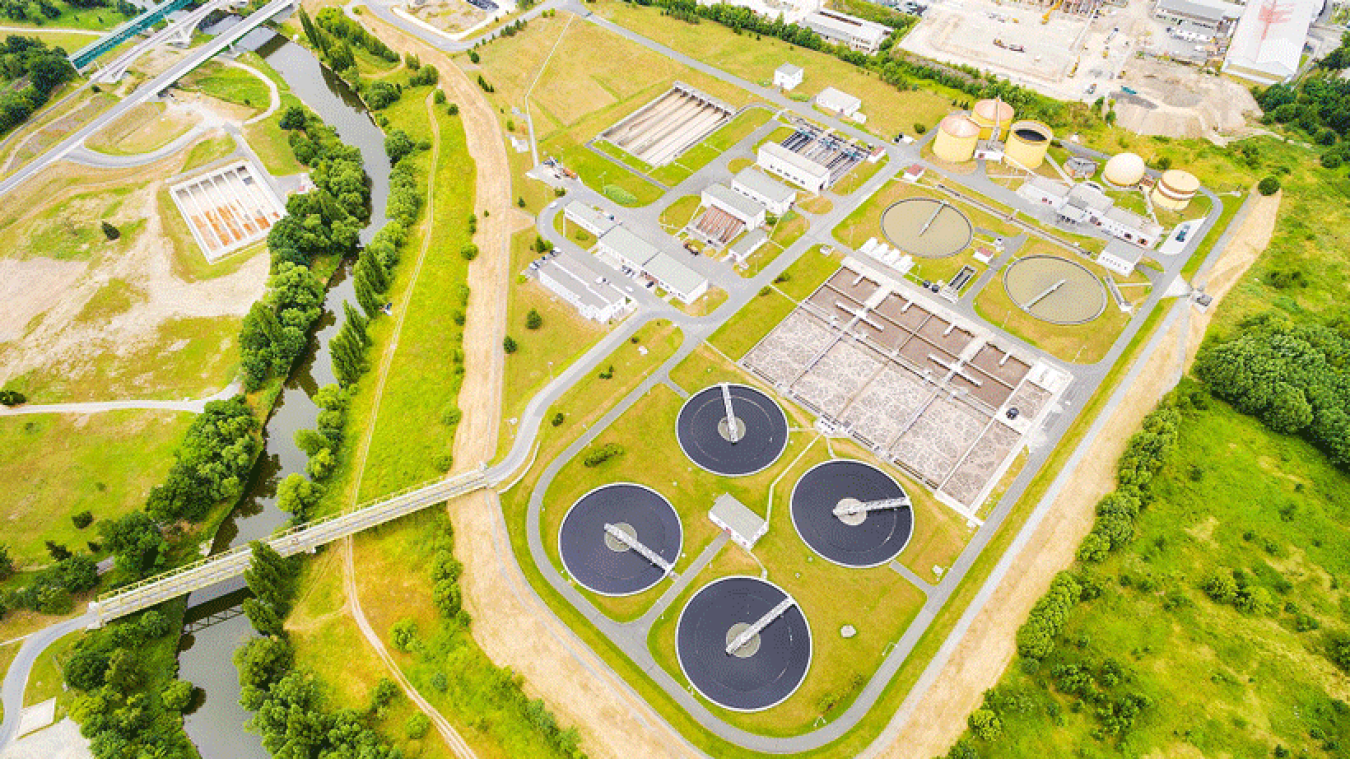
Oh, that's a good question, especially for some of you out there in the western states. The answer is yes. As we know, water management conservation and treatment consumes a lot of energy. Actually, water and waste water treatment sectors account for as much 3 percent of electricity in the U.S., and in the drinking water sector, pumping accounts for about 90 percent of energy use. Whereas in waste water treatment, the majority of energy use is due to treatment processes. The block grant funds can be used to increase energy efficiency in and reduce total energy consumption of waste water treatment facilities and for projects that increase energy efficiency or reduce energy use in the management or provision of water services to your public and your community. Thanks for that question, Dan.
Dan Beckley:
Great. This one is from Robert Adams. If renewable is placed on government ______, is it allowable?
Mark Bailey:
That's a great question, and — and Robert, we've heard that question from many, many potential grantees and customers in the last several months. Renewable energy, like ___________, renewable energy can be provided and installed on any government building. Government on the building means on the property surrounding that building, on any area that's owned — that's on that land, that — the criteria is the electricity being provided by that renewable supply needs to be fed into that building. One thing you can't do for renewable energy installation is put a wind farm in as a complete supply side project under this program, because this program is about energy efficiency and conservation, and we really want to encourage if you're looking at putting renewable energy ___________ on buildings, please make those same buildings part of your renovation plans for energy efficiency.
Dan Beckley:
Great. Johanna, actually I have two questions for you. One person is requesting that you repeat the URL for the website, and the second question is from Mary Campbell. And are the six questions covered in the entire application, I believe for the strategy, for each activity sheet?
Johanna Zetterberg:
Or for each activity sheet? Okay, so the website address is www.EECBG.Energy.gov. I'll say that one more time. www.Edward, Edward, Charlie, Bob, Garrett — Grant.Energy.gov. You can also Google EECBG and it should be one of the top hits there.
Okay, now to answer Mary Campbell's question, which is are the six questions covered for the entire application or for each activity sheet? Mary, the answer to your question is the strategy covers all of your activities. It's really meant to be a document that summarizes all your activities and tells us what your goals are and how you plan to implement it. We are trying to make this easy on you and reduce the amount of documents that you need to provide to us.
The point of the B-1 attachment, which is the activity sheet, is to go into a little bit more detail about your activities so that we can make an assessment whether or not it is an eligible activity. So you can think of the strategy really as a strategic document which summarizes all your activities, and the activity sheet as an explanation of your — of each activity so that you can show us that it is an eligible activity under the program. Thanks for that good clarifying question, Mary.
Dan Beckley:
Great. Thank you, Johanna. The next question is for Mark, from Ashley Monroe. Ashley asks is project engineering included in the budget for the block grant related projects, or must it be included in the 10 percent administration cap?
Mark Bailey:
That's a great question, Ashley. The project — any project engineering management of a program or project, that is not part of the administration. That is part of the individual activity part of the project and is not limited to that administration cap.
Dan Beckley:
Okay, thanks, Mark. Johanna, do I need to conduct a comprehensive admissions inventory for my community in order to report the greenhouse gas — report on GHC emissions tape?
Johanna Zetterberg:
Oh, that's a great question, especially since I know a lot of you have been working with Eckley or other partners to develop and emissions inventory in order to reduce those emissions. A comprehensive emissions inventory for your entire community is not necessary for this program. We really just want you to calculate and report on the GHC emissions that will be saved as a result of the activities funded by these program funds, and you should use the start date of those activities as your baseline. Thank you.
Dan Beckley:
Great. Mark, a question from Cynthia. When will the competitive grants ___________?
Mark Bailey:
The competitive grants _____ as the Funding Opportunity Announcement for the competitive grants will be announced in the next two to three months. Look for it in late summer. And again, that effort will include both a general fund of nearly $400 million and then a small $55 million fund which is targeting the ineligible entities, those that are not receiving direct grants from the department. But again, look for that in the next several months, and — and make sure you stay tuned and have bookmarked the EECBG website for the latest information on that announcement and other activities under the program.
Dan Beckley:
Great. Johanna, so if a — if the Energy Efficiency Conservation Strategy is not approved, would the energy lose all or part of its allocation?
Johanna Zetterberg:
No, Dan. All — all of you are expected to receive your allocations. If your application is not initially approved, you will be informed of the specific issues that need to be addressed in order to satisfy the requirements of the program. Actually, according to the authorizing statute that created this program, you will be able to revise and resubmit your proposed strategy as many times as necessary for approval. So don't worry if you don't get it right the first time. You'll be able to go back, do it over, resubmit in order to get approval, and we will work with you closely to let you know exactly what the problem was so that you can address it. Thanks.
Dan Beckley:
Great, thanks. I have a question for Mark from Amelia. Is there a limit to how much of the funding can be outsourced to consultants, as opposed to utilized by city staff?
Mark Bailey:
No, that's — Amelia, that's really your decision. As far as hiring a contractor, having it done in house, outsourcing it, hiring a consultant to manage a program, do your outreach, help with your projects, there are — there is no limitation to that. Now, if your program includes providing sub-grants for organizations, there are some limitations about providing a sub-grant from your grant to an outside non-governmental entity.
Dan Beckley:
Great. Another question. If you do not submit my — if I do not submit my strategy with my application, is it necessary to use block grant funds to develop my conservation — my Energy Efficiency Conservation Strategy?
Johanna Zetterberg:
No. Actually, there's no requirement about the development of a satisfactory Energy Efficiency and Conservation Strategy be funded with the block grant program funds. You can do that with other funds if you want to. We just need to get the strategy.
Dan Beckley:
Again, Johanna, let me ask you another one. What are the requirements for the block grant regarding public input and participation in the development of the Energy Efficiency Conservation Strategy?
Johanna Zetterberg:
Wow, these are great questions. There are no specific requirements regarding public participation in strategy development. However, transparency and accountability are both principles of the block grant program, as well as enforceable objectives of the Recovery Act. So I would encourage all of you grantees to consider your unique circumstances regarding the near and long term benefits of various ways to involve your communities in the public policymaking, that is this program, and implementing your activities and to structure your process accordingly.
Dan Beckley:
Mark, a question from Michael. Do local governments below the 35,000 population threshold need to apply through the state or the block grant competitive fund, or through FedConnect or both?
Mark Bailey:
That's a great question. First of all, if you're — if you're under 35,000 and — or if you're just over 35,000 or for counties that are under 200,000, please check our website for the allocation tables there. You can see A, if you're on that table, and B, how much money you'll be receiving.
For those cities, those counties that are not on that allocation table, under the population threshold, the funding that we are providing the state, 50 percent of the funding going to the state is targeting you, targeting those cities and counties that aren't receiving that direct grant from the department. Contact your state energy offices. I know they're working hard to develop the same kind of strategies that you guys are. What to do with that 60 percent of funding that they'll be passing through, again, remember states are required to pass through 60 percent of their money directly to small cities, small counties, the ineligible folks for direct grants.
So contact your state energy office, look at their website. I know many of them will be conducting competitive processes to — to find _________ that money. Others will be handing out direct grants. Others will be using a formula to provide the funding directly to you. Contact the energy office.
Johanna Zetterberg:
Mark, I'd like to just add on to that something that we didn't cover earlier, is that on the website I mentioned earlier, which is EECBG.Energy.gov, there is a link on the right hand side that looks like a little map of the country, and if you click on that, it will take you to a page which is the map. You can click on any state on the map and up will pop an Excel file which will show you each city and county as well as the state energy office in that state which is eligible for a direct formula grant from DOE under the program. So that's a great place to look if you don't know what your allocation amount is, or if you want to know what other local governments in your state are receiving funds under the programs through DOE so that you can coordinate with each other.
Dan Beckley:
Thanks, Johanna. I have another great question for you. Once — once an Energy Efficiency Conservation Strategy is submitted and approved, can it be amended by the grantee, and what is the process for that?
Johanna Zetterberg:
Yes, Dan. An amendment to your strategy once it's been submitted is possible, and this would typically be done through an amendment to the grant award once an award is made. So if you submit your strategy, you think you're going in one direction, it gets approved, maybe some new information or some new opportunities come your way that you want to take advantage of, you will be able to work that into your strategy and into your program implementation. But you would need to work with your award administrator at that time, who will outline a detailed process for you for how to revise your strategy in a way that's acceptable to DOE.
Dan Beckley:
Thank you. Mark, so we have a question now on the activity sheets and metrics, from Danielle Dower. If the activity to be performed is energy audits, where is the energy — where is the energy savings to be determined? How would you fill in the energy saved and greenhouse gas emissions reduced line?
Mark Bailey:
Danielle, great question. What we want on the project description is an estimate of what you — what you're forecasting those savings to be, how much of — how much of a budget you're allocating to that eligible activity and — and putting an estimate that will be looked at for consistency when we do the reviews of the applications. What we're gonna do to help you is provide estimated energy savings multipliers like how much is a typical audit program produced in energy savings, greenhouse gas emissions, energy cost savings once I implement it. That information will be coming soon and we will be posting that on the website to help you finalize your estimated savings before you turn in your application.
Dan Beckley:
Great, thanks. Okay, Johanna, is a public/private partnership project eligible?
Johanna Zetterberg:
Yes, Dan. Public/private partnership projects and programs are eligible. In fact, we really encourage you to leverage your program funds with any funds, with other federal public money, with state money, with private foundation money or any public or private source. So the short answer is yes. Public/private partnerships are eligible.
Dan Beckley:
Thank you. Okay, Mark, we have a question from Mary McCombs. Will — will grants that focus on local government waste reduction, recycling and conflicting program updates, calling and collection equipment or other waste related projects contribute to energy conservation and the efficiency be considered under this funding block?
Mark Bailey:
That's a great question. Absolutely, those material conservation waste reduction, anything that saves fossil fuels will be — is considered an eligible activity under the application, and we look forward to your proposal.
Dan Beckley:
Okay, Johanna, can funds be used as assessments or feasibility studies?
Johanna Zetterberg:
Well, Dan, most assessments and feasibility studies will be eligible activities. For example, you could retain — well, we all know, cause this is an eligible activity explicitly laid out, you can retain technical consultant services to assist in the development of your strategy, which includes formulation of goals, identification of strategies to achieve those goals, and you can also hire those technical consultant services to help you implement your strategy. So, yes, most assessments or feasibility studies which would be a part of that will be eligible.
Dan Beckley:
Great, thanks. We have a question from Anya. Can a non-profit or university partner with the city to receive benefits from block grants — the block grants on their infrastructure?
Mark Bailey:
Absolutely. The block grant program is really intended to help municipalities, cities and counties with the population they serve, and certainly our universities are critical to education and they are an important part of the potential for energy savings. Buildings and universities waste energy just like other buildings do, and your programs should look to partner and target many different sectors in your community, whether it be schools, K-12 schools, universities, hospitals, small businesses, homes, et cetera. So target — target the buildings and partner with the folks that can bring resources to the table or challenge that you really want to target for savings.
Dan Beckley:
Great, thanks. Okay, Johanna, we're gonna take just a couple more questions. Is there a requirement for a minimum amount spent on a — on a program or project?
Johanna Zetterberg:
No, Dan, there is no required minimum for what you would spend on a program or project or an activity. No required minimum.
Dan Beckley:
Okay. I have a question from Heidi. Can we install solar thermal on schools, Mark?
Mark Bailey:
That's a great question, and again, that's a renewable question. What can we do with renewable energy? Solar thermal is a great — a great technology. The answer is yes, you can if you include with that a program to renovate that building for — to take advantage of the opportunities for energy efficiency and conservation. So, yes, outside of government buildings you can include renewables, but you must include an energy efficient renovation as part of that program, as part of that project, along with that.
Now, one other point that I want to bring up on this renewable energy area, the renewable energy that you may want to implement to the block grant program may be outside the scope of the program. Keep in mind the state energy program, another sister program we have right here in our office, is a $3.1 billion program, and the state energy program can fund renewables from wind farms to geothermal projects to biofuels. So where you — where you're not sure or where you want to take renewables beyond what the block grant program can do for you, please contact your state energy office and find out what kind of programs they're helping serve you with as far as renewable energy.
Dan Beckley:
Great, thank you. Before the last question, let me just say that we will have — a lot of — the Department of Energy has received a lot of questions and answers and they will be posted on our block grants home page, the URL that Johanna gave you earlier, and we will also be sending out the presentations to the — to those who signed up to the webinar. So, Johanna, the last question, can funds be used to plant trees or implement urban forestry or green roof projects?
Johanna Zetterberg:
Well, you can propose activities which use the citing of trees as well as other landscape shading techniques for the purpose of decreasing the energy consumption of buildings only. So you will not be able to plant trees throughout your community if they're not serving the function of reducing the energy consumption of buildings. So you'll need to restrict the planting of trees and other plants for those purposes, and you will need to still estimate the specific energy use and greenhouse gas emissions reductions resulting from planting those trees or other landscape plants.
Well, thank you, Dan, and thank you everybody for sending us all of your great questions. We know that you'll continue to have questions as you move through the process of implementing this program. And please go to the website as your first stop shop to see if you can get an answer to your question, which is EECBG.Energy.gov. Please go check out the model strategies which are on our solutions center now and keep sending us your questions. We want to make sure that you are comfortable with what you're doing, you feel good about it, and most importantly, that this program is successful for you and for us. And I'll pass it back to Mark now.
Mark Bailey:
Thank you, Johanna and thank you, Dan. And thank all of you for coming today. I want to say one last thing about questions and answers. If you don't hear the answer to your question and — and we're still receiving questions hourly through FedConnect, through our e-mail address, in the — in the final — the final hour, propose your idea and defend your idea. So if not all Q&A's are answered when you're putting your application in, put your proposal in, justify your project activities and we'll take a look at that when we review your proposal.
I want to thank everybody today. I want to let you know this webinar and audio files are going to be posted on our website, so you'll be able to see the Power Point presentation. For those of you that maybe couldn't see it during the — during the webcast, it will be on our website. The Q&A and the audio will also be available there for folks that want to take a look at that.
And I want to give a quick advertisement. Our next webinar will be Wednesday, May 20th, and that will be on the application process. So today we talked about how to develop your strategy, the planning process. Next week we will talk about the application process, making sure you understand FedConnect, how to get your application in to FedConnect and any questions you may have on that part of the program. These two webinars, both on the strategy development and on the application process will be given on a rolling basis until your plans are — until the deadline, June 25th.
So watch our website, take a look at that. We will post — the schedule is up there on our next — our next webcast, and we look forward to hearing you — hearing from you again. Good luck in your planning and your strategy development and we are looking — we are really looking forward to the great results you guys are going to achieve. Thank you.